
CPU Coolers
Processor temperatures directly affect clock speed stability, system longevity, and the acoustic profile of any high-performance build, making the choice of cooling solution one of the most consequential decisions a builder makes. TEUCER CPU Coolers offer both air and liquid cooling configurations engineered to handle modern multi-core processors running at sustained boost frequencies without throttling or excess noise. Visit the official store now to find the best price on every model and configure a thermal solution matched to your socket and TDP requirements.
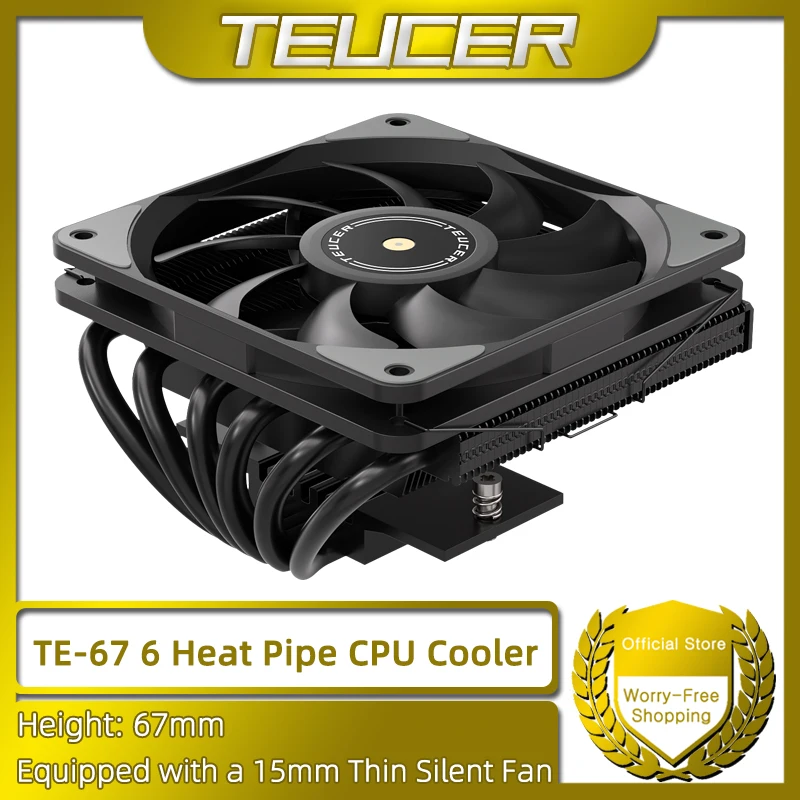
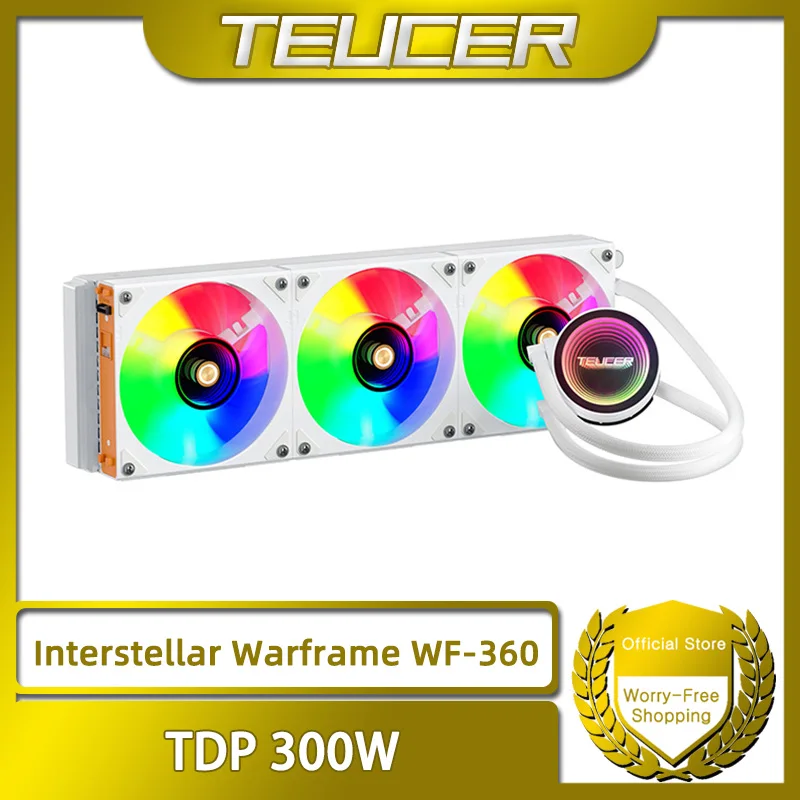


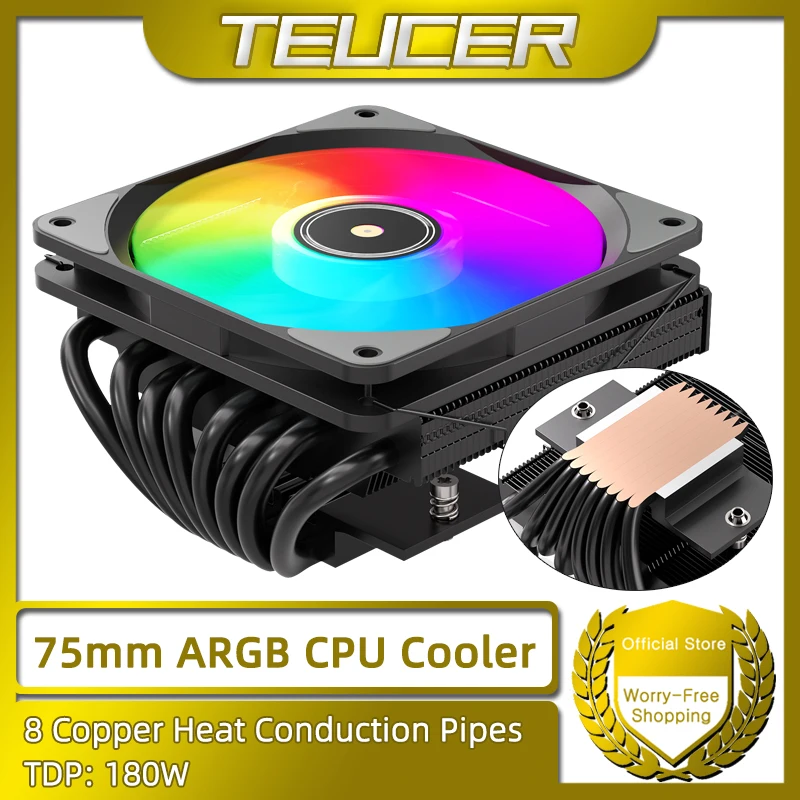

TEUCER CPU Coolers — Air and Liquid Cooling for Modern Processors
TEUCER CPU Coolers address the fundamental challenge that high-core-count processors present: sustained heat output that exceeds what basic stock coolers can dissipate without causing frequency throttling. The category includes both air tower coolers and closed-loop liquid coolers, giving builders the flexibility to match thermal solution to available chassis space and acoustic budget. Air coolers in the lineup feature large aluminum fin stacks paired with direct-contact heatpipes that transfer heat away from the CPU IHS with measurable efficiency. Liquid coolers use a pre-filled pump-and-radiator loop available in 240mm and 360mm radiator configurations to scale thermal capacity with processor TDP. All models support a broad range of Intel and AMD sockets, covering LGA1700, LGA1851, AM4, and AM5 platforms without requiring separate mounting hardware purchases. The trusted brand engineering behind each unit prioritizes long-term reliability over peak benchmark figures, ensuring consistent temperatures across thousands of hours of operation. Whether you run a gaming rig, a workstation, or a silent home theater PC, this lineup contains a cooling solution sized for your specific thermal envelope.
Heat Transfer Technology and Construction Quality
Direct-contact heatpipe technology routes copper heatpipes flush against the CPU heat spreader surface, eliminating the intermediate copper base layer that adds measurable thermal resistance in traditional tower designs. Six-millimeter diameter heatpipes carry heat via phase-change refrigerant vapor from the contact zone to the fin stack in milliseconds, allowing the aluminum array to radiate heat before temperatures spike during sudden workload bursts. The fin stack uses aluminum alloy with a stamped wave profile that increases surface area per unit height, improving convective heat dissipation without requiring a taller tower. Liquid cooler pump heads incorporate a ceramic shaft bearing rated for continuous operation at elevated coolant temperatures, reducing the risk of pump failure that shortens the lifecycle of competing AIO designs. Radiator cores use copper microchannel tubing brazed to aluminum fins, a combination that balances corrosion resistance with high thermal conductivity across the full coolant flow path. Fan blade geometry on both air and liquid cooler variants is tuned for the specific static pressure demands of dense fin stacks and radiator cores rather than open-air scenarios. Best-in-class thermal interface material is pre-applied to every cooler contact surface, ensuring optimal gap filling from the first installation without requiring the builder to source or apply separate compound.
Air Versus Liquid Cooling — Performance and Value Compared
Air coolers deliver competitive thermals for processors up to approximately 200W TDP with zero moving parts in the heat transfer loop, meaning no pump failure risk and predictable long-term reliability across the full product lifespan. Liquid coolers handle processors with TDP values exceeding 200W more effectively because the larger radiator surface area dissipates heat at a rate that fin stacks of equivalent chassis footprint cannot match. Noise output favors liquid cooling at heavy sustained loads because the pump and radiator fans can spin at lower RPM than an air cooler fan working at its thermal limit. For compact ITX builds, low-profile air coolers in this category provide a viable thermal solution where a 240mm or 360mm radiator physically cannot fit within case dimensions. TEUCER CPU Coolers in the liquid segment ship with PWM fans pre-configured for radiator static pressure duty, eliminating the mismatch that occurs when builders pair AIO radiators with case fans designed for open airflow. Pricing across both segments reflects genuine component costs rather than brand premium, making these units among the best value cooling options available when ordered from the official store. Shop now and compare air and liquid configurations side by side to identify which thermal solution delivers the required CPU temperature delta within your acoustic and budget constraints.
Selecting and Installing the Right CPU Cooler for Your System
Begin by identifying your processor TDP under sustained all-core load rather than the base TDP figure on the product specification sheet, since boost behavior routinely raises real-world heat output 30 to 50 percent above rated values. Match that sustained TDP to the cooler thermal rating published in the product specifications, leaving a 20 percent headroom buffer to account for ambient temperature variation in warmer climates or poorly ventilated rooms. Verify socket compatibility before ordering: LGA1700 and LGA1851 require different mounting pitch dimensions than AM4 and AM5, and each TEUCER CPU Cooler product page lists confirmed compatible socket configurations. For liquid coolers, confirm that your case supports the radiator length you select — 240mm radiators fit in most mid-towers, while 360mm units require a full-tower or purpose-built case with front or top mounting clearance. Torque the mounting screws to the specified pattern — alternate corners in a cross sequence — to distribute contact pressure evenly across the CPU heat spreader and prevent cold spots that raise junction temperatures. After installation, run a 30-minute sustained load test using a processor stress utility and monitor temperatures with hardware monitoring software to confirm the cooler is performing within its rated thermal window. Order online through the official store to receive the correct mounting hardware kit for your socket, a full warranty, and the best available price on both air and liquid cooling configurations.